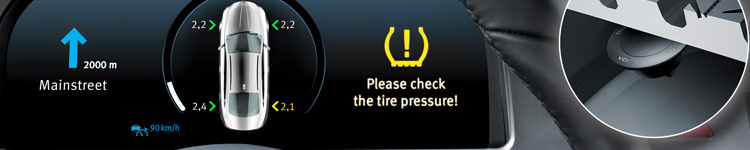
The next time you see that little TPMS light on your dashboard, don’t fear it or hope it will go away.
It’s your car’s way of talking to you! At the very worst, it is a cry for help from your vehicle to get your tyres looked at, and with that same vehicle taking you from ‘A to B’ on so many occasions, it would be wrong to just ignore it.
If your vehicle was built after 2014, it will probably be fitted with a Tyre Pressure Monitoring System (TPMS for short). You might not think much about it, but it plays a crucial role in keeping you safe on the road.
So, what is TPMS, exactly? In simple terms, it’s your car’s way of checking your tyre pressure for you. It uses sensors to monitor the pressure in each tyre and alerts you when something’s not right. If your pressure drops, or if there’s an issue with the system itself, a warning light will appear on your dashboard, often shaped like a flat tyre with an exclamation mark.
Think of it as a friendly nudge, not an annoying warning!
Your tyres are the only contact points between your car and the road and if one or more are underinflated, it can affect how your vehicle handles, increase stopping distances, and even lead to blowouts. TPMS helps prevent this by alerting you early, so you can take action before it becomes dangerous.
Plus, properly inflated tyres help in the following ways:
If your car was registered after January 2012, TPMS needs to be working properly to pass the MOT testing. A faulty sensor or warning light that stays on could lead to a failure.
How ETB can help – working with TPMS leaders
At ETB Autocentres, we know TPMS inside-out because we work closely with Autogem - the UK’s market leader in tyre pressure monitoring systems. They’ve been pioneering this technology in the aftermarket longer than anyone else and have helped deliver quick, professional TPMS servicing and sensor replacements.
Many modern systems use specialist valves with internal sensors attached, which can wear out or corrode over time. Batteries inside the sensors typically last between five and eight years, so if your vehicle is older, it may be time for a check-up.
Our technicians can:We can even source sensors that are compatible with over 98% of vehicles on the road - at a fraction of the cost of main dealer prices!
Common reasons for TPMS issues
Even if your tyres look fine, sensors can still fail. Here are a few common causes:
Whatever the issue, we’ll quickly identify the problem and give you honest advice on the best fix — no jargon, no hassle.
Be TPMS Smart
If that little light comes on, don’t ignore it! Pop into your nearest ETB garage and we’ll take care of the rest.
Calls may be recorded for training and to ensure the best quality customer service.
TYRE BRANDS
Bridgestone - Avon - Michelin - Pirelli - Continental - Davanti - Ceat